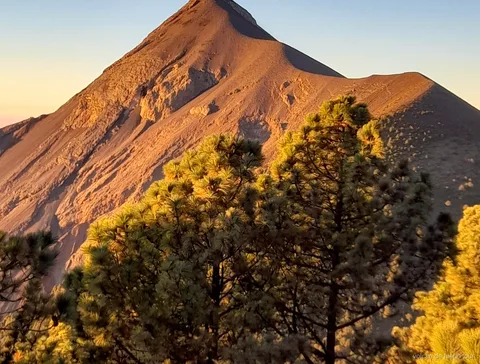
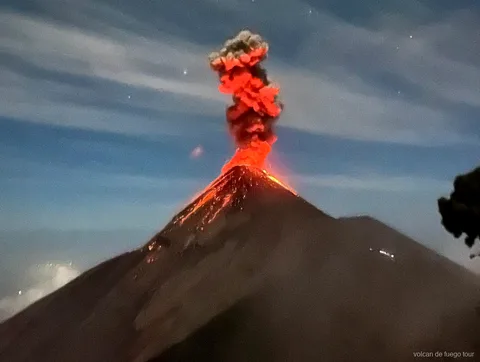
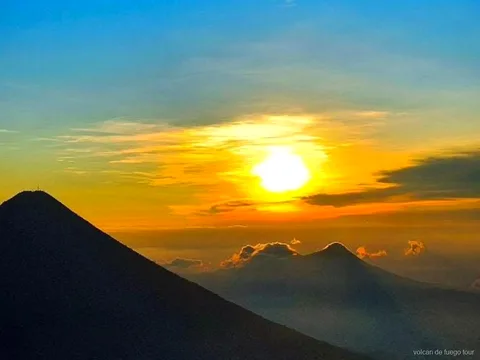
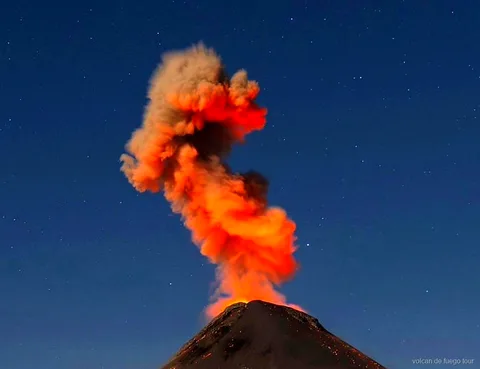
Un tour al volcán de fuego es la razón por la que la mayoría de los viajeros suman Antigua Guatemala a su itinerario: una subida guiada al vecino Acatenango para ver de cerca uno de los volcanes más activos de Centroamérica lanzar ceniza, lava y algún rayo volcánico contra el cielo nocturno. En este sitio comparamos 8 tours reales que cubren esa experiencia desde todos los ángulos: una caminata compartida desde €50, opciones en 4x4 y campamentos de glamping entre €130 y €310, y un tour privado para todo el grupo desde €1.143. Elijas el que elijas, el objetivo es el mismo: un asiento de primera fila para ver el Fuego en erupción, de forma segura y sin adivinar la logística.
¿Cuál Es la Diferencia Entre el Volcán Acatenango y el Volcán de Fuego?
No son el mismo volcán, y esta es la confusión más común entre quienes visitan por primera vez. El Acatenango, a 3.976 metros, está dormido y es la montaña que casi todos los tours suben a pie. El Fuego, a unos 3.763 metros, es el volcán activo que hace erupción al otro lado de la cresta que todos van a ver.
Cuando un operador anuncia un tour al volcán de fuego, casi siempre significa subir el Acatenango para ver el Fuego desde un mirador seguro, no llegar a la cima del propio Fuego. Sus laderas están demasiado activas para permitir el acceso regular, así que ningún operador serio ofrece ese itinerario. Nuestra guía de senderismo al Volcán de Fuego explica la ruta real que siguen los tours y por qué se organiza así.

¿Cuánto Cuesta un Tour al Volcán de Fuego?
Los precios de este sitio van desde unos €50 por la caminata compartida más económica hasta €1.143 por un tour privado para el grupo completo. La mayoría de las opciones en 4x4 y de grupo pequeño se ubican entre €130 y €310 por persona.
El tamaño del grupo, el alquiler de equipo, el transporte y los permisos son los factores que más mueven el precio final entre un tour y otro. Nuestra guía de precio del tour al Volcán Acatenango desglosa cada uno de esos costos en detalle. Todos los precios de este sitio llevan fecha de referencia y pueden variar según la temporada y la disponibilidad, así que trátalos como un punto de partida antes de reservar.
Tipos de Tour al Volcán de Fuego: Caminata, 4x4 y Privado
Los 8 tours de este sitio se agrupan en tres formatos principales: la caminata clásica de cinco horas, las opciones asistidas en 4x4 que evitan el tramo más empinado del sendero, y el tour privado con vehículo y guía exclusivos para tu grupo.
La opción más económica es el tour para subir el Volcán Acatenango, desde €50 por persona, con transporte, guía, comidas y cabañas compartidas incluidas a cambio de una subida exigente de cinco horas. En el rango medio, el tour Volcán de Fuego 4x4 con glamping, desde €255, cambia gran parte del esfuerzo físico por un trayecto en vehículo todoterreno y una carpa de glamping en el campamento. Quien prefiera ver el volcán sin caminar puede revisar el tour 4x4 al volcán Acatenango y Fuego, que explica a quién le conviene esta ruta asistida. En el nivel más alto, el tour privado al volcán Acatenango en 4x4, desde €1.143 para todo el grupo y no por persona, reserva el vehículo, el guía y el campamento en exclusiva.
Para una comparativa completa de cada operador y qué separa a uno bueno de uno mediocre, revisa nuestra guía del mejor tour al Volcán Acatenango.
¿Cómo Reservar un Tour al Volcán de Fuego y Asegurar tu Cupo?
Reserva con anticipación, sobre todo en temporada seca: los horarios de atardecer y las salidas nocturnas más populares se agotan varios días antes durante los meses de mayor demanda. La mayoría de los tours de este sitio incluyen cancelación gratuita hasta cierta fecha, así que reservar temprano cuesta poco más allá de la reserva inicial.
Si aún dudas entre una caminata completa, una opción en 4x4 o algo intermedio, nuestra guía de tour al Volcán Acatenango y Fuego compara los 8 productos de este sitio con el detalle completo de qué incluye cada uno.
¿Cuál Es la Mejor Época para Ver el Fuego en Erupción?
La temporada seca, de noviembre a abril, ofrece los cielos más despejados y las mejores probabilidades de ver las erupciones del Fuego sin nubes de por medio. La temporada de lluvias, de mayo a octubre, sigue funcionando con tours, pero las tormentas de la tarde pueden tapar la vista alguna noche puntual.
La altitud pesa tanto como el calendario. Los campamentos base del Acatenango se ubican entre 3.600 y 3.700 metros, y la cumbre llega a 3.976 metros, lo suficientemente alto para que algunos visitantes sientan dolor de cabeza o falta de aire incluso con buen clima. Pasar una o dos noches en Antigua, que está a unos 1.500 metros, antes del tour ayuda al cuerpo a aclimatarse un poco. Empaca para temperaturas cercanas a cero en el campamento sin importar el mes que elijas, porque la altura afecta el frío mucho más que el calendario.
¿El Tour Sale Desde Antigua o Desde la Ciudad de Guatemala?
Casi todos los tours de este sitio salen desde un punto de encuentro céntrico en Antigua Guatemala, la base recomendada por su cercanía al sendero y por su oferta de hoteles y restaurantes. Algunos operadores ofrecen recogida adicional desde la Ciudad de Guatemala, aunque eso suma tiempo de traslado al itinerario total.
Si llegas por avión, el Aeropuerto Internacional La Aurora (GUA) en la Ciudad de Guatemala es el más cercano, a unos 90 minutos de Antigua en shuttle o traslado privado. Nuestra guía sobre si el tour sale desde Antigua o desde la Ciudad de Guatemala detalla los dos puntos de salida y cuál conviene según de dónde llegues.
¿Qué Esperar Durante un Tour al Volcán de Fuego?
La mayoría de los tours de dos días siguen un mismo arco: salida desde Antigua en la mañana o al mediodía, traslado al inicio del sendero, una caminata de varias horas o un tramo más corto asistido en 4x4 hasta el campamento base, una cena caliente al atardecer y, después, el plato principal: ver al Fuego hacer erupción al otro lado del valle ya de noche. El alojamiento va desde cabañas compartidas en los tours más económicos hasta carpas de glamping o cabañas con calefacción en las opciones premium.
El segundo día suele empezar antes del amanecer con una caminata opcional a la cumbre del Acatenango para ver salir el sol, seguida del descenso y el regreso a Antigua durante la mañana. Un par de productos rompen este patrón: la caminata nocturna sin campamento sube de un tirón para llegar a la cumbre al amanecer, y el tour que ruta hacia la propia cresta del Fuego usa un área de observación autorizada para un ángulo más cercano de las erupciones.
¿Quién Debería Elegir Cada Tipo de Tour?
Los excursionistas en buena forma que buscan el logro de la cumbre completa deben mirar las caminatas clásicas, que premian el esfuerzo con el precio más bajo. Quienes quieren la vista de las erupciones sin entrenar antes, familias con adolescentes mayores, parejas o cualquiera que se recupera de una lesión, encajan mejor con una opción en 4x4 que cubre la mayor parte del desnivel en vehículo. Los fotógrafos suelen preferir la versión que les deja más energía al llegar al campamento para armar el trípode.
Los grupos de cuatro o más personas que buscan privacidad y un horario propio deben comparar el costo por persona de un tour privado frente a la opción compartida, ya que dividido entre varios viajeros puede acercarse al precio de un 4x4 en grupo. Nuestra guía de tour privado o en grupo al Volcán Acatenango compara ritmo, costo y flexibilidad entre ambos formatos, y nuestra guía de tour de 1 día o 2 días 1 noche ayuda a decidir cuánto tiempo dedicarle al viaje.

Consejos de Expertos para tu Tour al Volcán de Fuego
Empaca capas de abrigo aunque tu tour incluya 4x4, porque la temperatura del campamento suele bajar cerca del punto de congelación después del anochecer. Usa calzado ya probado, no zapatos nuevos, ya que la grava suelta de los senderos hace resbalar el calzado sin estrenar. Lleva una linterna frontal con pilas de repuesto, dado que la mayor parte de la observación de erupciones y cualquier subida a la cumbre ocurre en plena oscuridad.
Carga tu cámara al máximo antes de salir, porque el frío nocturno agota la batería justo cuando las erupciones se ven mejor. Lleva efectivo en quetzales para entradas o extras que suelen pagarse en el lugar, y no cambies dólares o euros en el campamento. Por último, cena bien y descansa un poco antes de que las erupciones lleguen a su punto alto: pasar toda la tarde tomando fotos deja poca energía para la subida a la cumbre o para la noche fría que sigue.
¿Qué Más Visitar Cerca del Volcán de Fuego?
Antigua Guatemala, ciudad Patrimonio de la Humanidad de la UNESCO de calles empedradas y ruinas coloniales, merece al menos un día antes o después del tour. Muchos viajeros suman también el Lago de Atitlán, a pocas horas al oeste, o el Volcán Pacaya, más cerca de la capital y conocido por su caminata más corta. Si tu viaje incluye varios días en la zona, nuestra sección de tours al Volcán Acatenango y Fuego reúne todas las opciones de este sitio en un solo lugar, y la página de tours lista los 8 productos completos con fotos y detalles.
¿Es Seguro Subir al Acatenango para Ver el Fuego en Erupción?
Sí, cuando se reserva con un operador con licencia que sigue una ruta establecida. Los guías mantienen a los visitantes en los senderos y miradores designados del Acatenango, lejos de las zonas de lahares y flujos piroclásticos que el instituto de vulcanología de Guatemala vigila alrededor de los flancos activos del Fuego. Los operadores ajustan rutas o posponen salidas cuando sube el nivel de actividad, una precaución que se reforzó tras la erupción de 2018, que causó decenas de víctimas en comunidades cercanas.
Ninguna planificación garantiza clima perfecto o una erupción puntual una noche específica, ya que el Fuego es un sistema natural impredecible y no un espectáculo programado. Lo que sí garantiza un buen operador es una ruta que te mantenga seguro mientras lo disfrutas de todas formas. El Smithsonian Institution mantiene un registro detallado de la actividad histórica del Fuego para quien quiera profundizar. Compara los 8 tours de este sitio y encuentra el que mejor se ajusta a tu condición física, presupuesto y horario para ver de cerca uno de los volcanes más activos de Centroamérica.